- Setting up a local entity is a significant operational decision. It involves country-specific incorporation requirements, employment obligations, tax registrations, banking, reporting, and ongoing compliance responsibilities.
- This guide explains the process step by step. From selecting an entity structure to establishing payroll, banking, and compliant local employment processes, you’ll understand the major considerations involved.
- Designed for practical expansion planning. This guide helps organizations assess when entity setup supports long-term growth, and when a more flexible workforce model may be more appropriate.
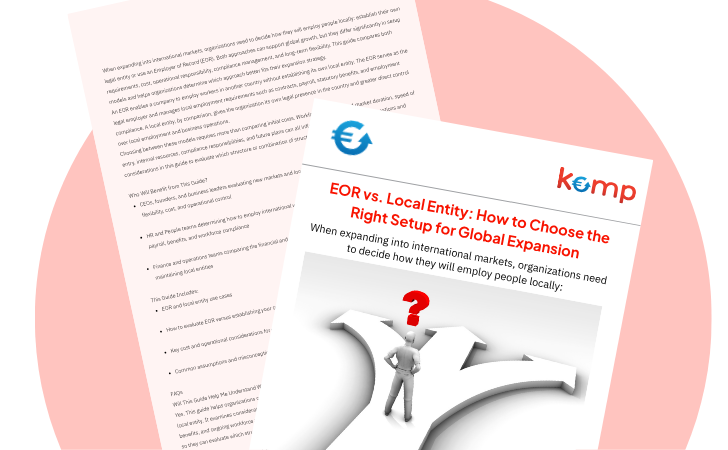
Expanding into another country often starts with an important question:
Should you establish your own local entity, or use an alternative model such as an Employer of Record?
A local entity can provide greater control and support a long-term presence, but it also creates permanent legal, financial, employment, and administrative responsibilities. Organizations need to understand local laws, reporting obligations, employment requirements, tax considerations, and operational processes before committing.
This complete guide to setting up a local entity abroad provides a structured overview of what the process involves, helping organizations evaluate the decision with greater clarity.
What Makes This Guide Different?
This is not simply a technical summary of incorporation requirements.
The guide focuses on the practical considerations involved in establishing a legal presence, including:
- How to evaluate subsidiaries, branches, and other local entity structures
- What organizations need to consider when hiring employees under local employment requirements
- How local banking and financial operations are typically established
- Employer obligations such as statutory contributions, benefits, and workforce administration
- Corporate tax, regulatory filings, and ongoing compliance responsibilities
- Operational considerations including local administration, language, and country-specific processes
You’ll also learn how to compare entity establishment with alternative employment models based on speed, cost, control, workforce scale, and long-term market commitment.