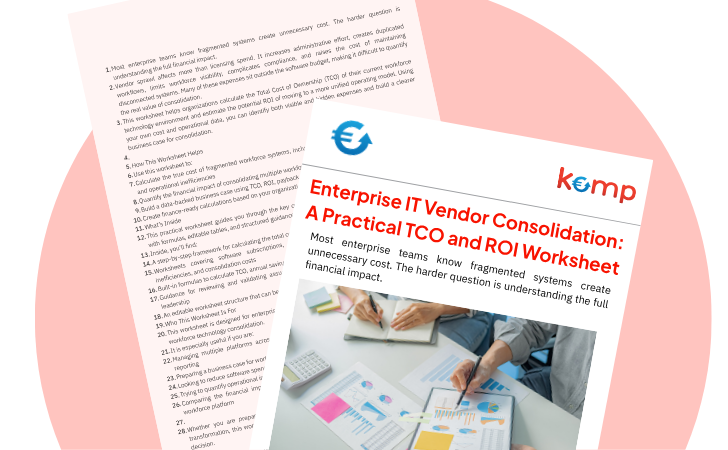
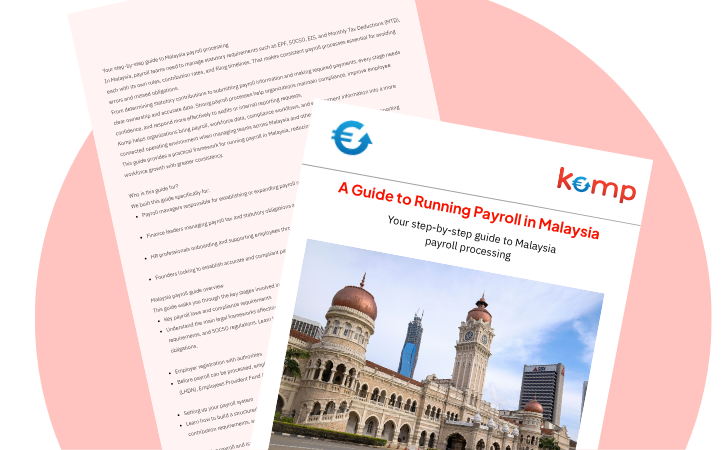
Your step-by-step guide to Malaysia payroll processing
In Malaysia, payroll teams need to manage statutory requirements such as EPF, SOCSO, EIS, and Monthly Tax Deductions (MTD), each with its own rules, contribution rates, and filing timelines. That makes consistent payroll processes essential for avoiding errors and missed obligations.
From determining statutory contributions to submitting payroll information and making required payments, every stage needs clear ownership and accurate data. Strong payroll processes help organizations maintain compliance, improve employee confidence, and respond more effectively to audits or internal reporting requests.
Komp helps organizations bring payroll, workforce data, compliance workflows, and employment information into a more connected operating environment when managing teams across Malaysia and other markets.
This guide provides a practical framework for running payroll in Malaysia, reducing common payroll risks, and supporting workforce growth with greater consistency.
Who is this guide for?
We built this guide specifically for:
- Payroll managers responsible for establishing or expanding payroll operations in Malaysia
- Finance leaders managing payroll tax and statutory obligations across multiple markets
- HR professionals onboarding and supporting employees throughout APAC
- Founders looking to establish accurate and compliant payroll processes from the start
Malaysia payroll guide overview
This guide walks you through the key stages involved in establishing and operating payroll in Malaysia:
- Key payroll laws and compliance requirements: Understand the main legal frameworks affecting payroll in Malaysia, including the Employment Act, Income Tax Act, EPF requirements, and SOCSO regulations. Learn how different authorities influence payroll calculations, reporting, and employer obligations.
- Employer registration with authorities: Before payroll can be processed, employers generally need to complete required registrations with the Inland Revenue Board (LHDN), Employees Provident Fund (EPF), and Social Security Organization (SOCSO).
- Setting up your payroll system: Learn how to build a structured payroll process by collecting employee information, defining salary components, determining contribution requirements, and creating consistent payroll workflows.
- Processing payroll and issuing payslips: Understand how to move from gross to net pay, apply EPF, SOCSO, EIS, and tax deductions, and provide employees with payslips containing the required payroll information.
- Remitting contributions and filing returns: Review the processes and timelines involved in remitting statutory contributions and completing required payroll, tax, and social insurance reporting.
- Handling payroll variations and off-cycle payments: Learn how to manage additional compensation such as bonuses, allowances, reimbursements, prorated salary, and payments processed outside the normal payroll cycle.
- Payroll solutions and centralized management: Explore different approaches to running payroll in Malaysia and how connected payroll technology can help organizations coordinate payroll data, compliance requirements, and multi-country workforce operations.
5 steps to setting up payroll in Malaysia
1. Register with local authorities
Before hiring and paying employees in Malaysia, complete the appropriate registrations with the Inland Revenue Board (LHDN), Employees Provident Fund (EPF), and Social Security Organization (SOCSO). Each authority has its own registration process and employer requirements.
2. Collect employee information
Gather complete and accurate information for each employee, including relevant tax identifiers, EPF and SOCSO details, bank information, and applicable work authorization details for foreign workers.
3. Define salary components
Establish each employee's compensation structure, including basic salary, allowances, bonuses, commissions, and overtime, while identifying which elements are included when calculating statutory deductions.
4. Set up statutory deductions
Configure payroll processes to calculate applicable EPF, SOCSO, EIS, and Monthly Tax Deductions based on employee category, earnings, and current statutory requirements.
5. Prepare to issue compliant payslips
Payslips should clearly show employee earnings, deductions, and net pay. Employers also need payroll processes that support Malaysia's salary payment and statutory filing timelines.
How Komp simplifies payroll management in Malaysia
Whether managing a Malaysian entity or evaluating another employment model, Komp helps connect payroll with broader workforce operations across employees, contractors, and international teams.
Hire employees without a local entity
- Use an Employer of Record (EOR) model to employ eligible workers in Malaysia without first establishing your own local employing entity
- Coordinate employee information, employment documentation, and workforce processes within a connected operating environment
- If you already operate a Malaysian entity, use global payroll capabilities to connect in-country payroll with wider workforce data
- Manage independent contractors alongside other worker populations while maintaining clearer visibility across workforce structures
Strengthen compliance with Malaysian labor laws
- Connect payroll information with statutory contribution and workforce compliance processes
- Use AI-assisted compliance monitoring to surface relevant workforce and regulatory changes for human review
- Maintain structured employment documentation and workforce information to support stronger compliance governance
Simplify payroll and tax management
- Centralize payroll information and gross-to-net payroll processes within broader workforce operations
- Reduce reliance on fragmented payroll information across multiple systems and providers
- Support recurring payroll, deductions, reporting, and statutory contribution workflows with clearer operational visibility
Manage the full employee lifecycle
Komp helps connect workforce information and processes across the employee lifecycle, reducing manual handoffs between separate HR and payroll systems. Organizations can use Komp to coordinate:
- Employment contracts and workforce documentation
- Employee and worker onboarding information
- Payroll and relevant workforce administration
- Employee lifecycle and offboarding workflows




.png)












































.png)