Guide

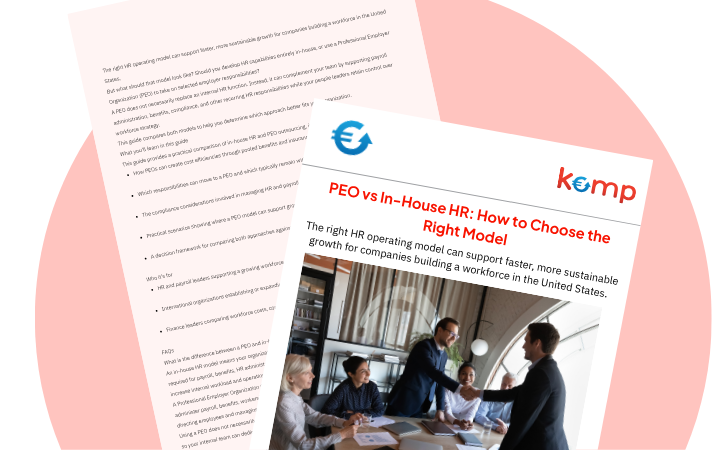
PEO vs In-House HR: How to Choose the Right Model

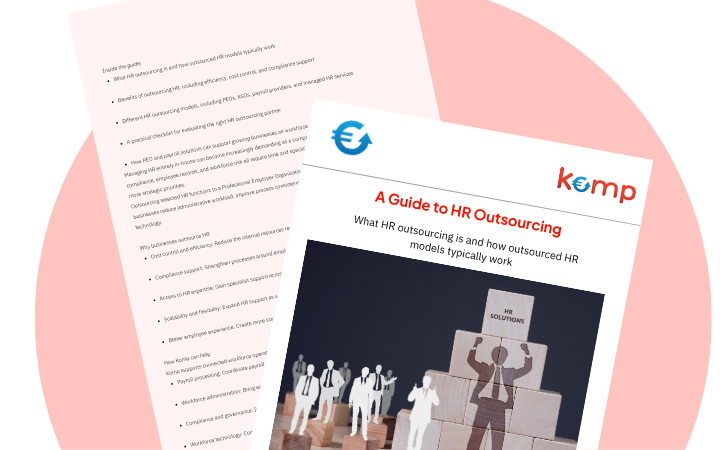
The right HR operating model can support faster, more sustainable growth for companies building a workforce in the United States.

But what should that model look like? Should you develop HR capabilities entirely in-house, or use a Professional Employer Organization (PEO) to take on selected employer responsibilities?

A PEO does not necessarily replace an internal HR function. Instead, it can complement your team by supporting payroll administration, benefits, compliance, and other recurring HR responsibilities while your people leaders retain control over workforce strategy.

This guide compares both models to help you determine which approach better fits your organization.

What you’ll learn in this guide

This guide provides a practical comparison of in-house HR and PEO outsourcing, including:

  • How PEOs can create cost efficiencies through pooled benefits and insurance arrangements
  • Which responsibilities can move to a PEO and which typically remain with internal HR
  • The compliance considerations involved in managing HR and payroll entirely in-house
  • Practical scenarios showing where a PEO model can support growing organizations
  • A decision framework for comparing both approaches against your business requirements

Who it’s for

  • HR and payroll leaders supporting a growing workforce across the United States
  • International organizations establishing or expanding their US teams
  • Finance leaders comparing workforce costs, compliance considerations, and employee experience

FAQs

An in-house HR model means your organization directly manages the people, technology, expertise, and external support required for payroll, benefits, HR administration, and employment compliance. This provides greater direct ownership but can increase internal workload and operating costs.

A Professional Employer Organization (PEO) uses a co-employment structure. Depending on the arrangement, the PEO can administer payroll, benefits, workers’ compensation, and certain compliance responsibilities, while your company continues directing employees and managing everyday business activities.

Using a PEO does not necessarily mean eliminating internal HR. Instead, administrative responsibilities can be shifted to the PEO so your internal team can dedicate more attention to workforce strategy, culture, engagement, and growth.

PEOs can use their broader employee populations and purchasing scale to create efficiencies across areas such as health benefits, workers’ compensation, payroll administration, and HR services. This can give smaller organizations access to benefit structures and administrative resources that may otherwise be more difficult or expensive to manage independently.

Actual savings depend on factors including workforce size, benefit requirements, location, existing internal capabilities, and the commercial structure of the PEO relationship.

A PEO typically supports:

  • Payroll administration and applicable payroll tax processes
  • Employee benefits administration and enrollment
  • Workers’ compensation and employment-related insurance administration
  • Compliance documentation, reporting, and certain employment-related requirements

Your internal HR team typically retains:

  • Everyday employee and performance management
  • Company culture, engagement, and employee experience
  • Talent acquisition and strategic workforce planning

The exact responsibilities depend on the PEO agreement, allowing organizations to determine where external administrative support adds value while keeping strategic people decisions internally.

No. A PEO co-employment relationship does not transfer control of your overall business or workforce strategy. Your organization continues making decisions about hiring, employee responsibilities, performance, organizational structure, and workplace culture.

The PEO handles agreed administrative and employer-related responsibilities, while your internal leadership remains responsible for the people decisions that shape the organization.

PEOs can be particularly useful for small and mid-sized organizations, rapidly growing businesses, and international companies establishing US operations. These organizations may not yet have the scale or resources to build dedicated internal teams across payroll, benefits, compliance, and HR administration.

Rather than relying on a specific headcount threshold, companies should compare their administrative workload, internal expertise, benefits requirements, geographic complexity, compliance needs, and projected workforce growth when deciding between PEO and in-house HR.

A PEO relationship introduces an external partner into important workforce processes, so organizations should consider:

  • Selecting a provider with the right service quality, transparency, compliance capabilities, and operating model
  • Defining responsibilities clearly while retaining sufficient internal HR capability for culture and employee relations

Organizations should compare these considerations against the cost, administrative workload, compliance responsibilities, and expertise required to manage the same functions internally. Komp can support this broader evaluation by connecting workforce information, payroll, compliance, and employment models within a more unified workforce operating environment.

Your Details

Realted Resources

Left-pointing arrow icon.
Right-pointing arrow icon.