Guide

How to Manage a Global Workforce with an Employer of Record (EOR)

  1. Global workforce management becomes more complex as organizations expand across countries. Employment laws, payroll requirements, tax filings, statutory benefits, and employment documentation all vary by jurisdiction.  
  1. An Employer of Record (EOR) simplifies international hiring. The EOR acts as the legal employer and manages local employment responsibilities while your organization continues to direct the employees’ day-to-day work.  
  1. Connected workforce infrastructure supports scalable growth. Centralized payroll, compliance, workforce data, and lifecycle processes can help organizations expand without building a separate legal entity in every market.  

As organizations grow beyond their home market, managing people across multiple countries becomes significantly more demanding.

Processes that worked domestically, manual coordination, separate payroll providers, disconnected HR systems, and informal oversight, can quickly become difficult to manage across jurisdictions. HR, Finance, Legal, and Operations teams need to account for different employment laws, payroll cycles, currencies, tax obligations, social contributions, and local workforce requirements.

Without the right operating model, international growth can create more fragmentation than efficiency.

This is where an Employer of Record (EOR) can play an important role.

Instead of establishing a local entity in every country, organizations can use an EOR to employ workers internationally. The EOR becomes the legal employer and manages local employment administration, payroll, statutory requirements, and employment documentation, while the client organization retains responsibility for the employee’s day-to-day work.

What Makes This Guide Different?

This is not a general overview of international hiring.

The guide focuses specifically on EOR-enabled global workforce management, including:

  • How Employer of Record services support international hiring
  • The employment responsibilities typically managed by an EOR
  • Managing payroll, tax, statutory benefits, and local employment requirements
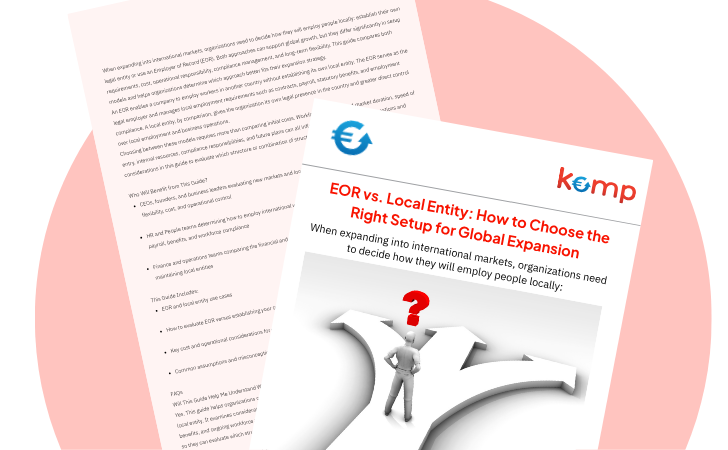
  • The difference between an EOR and a Professional Employer Organization (PEO)
  • When EOR may be more appropriate than establishing a local entity
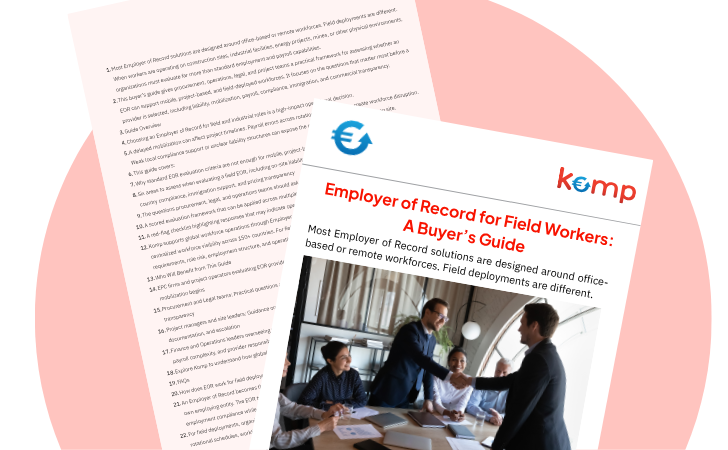
  • How EOR can support distributed and remote workforces
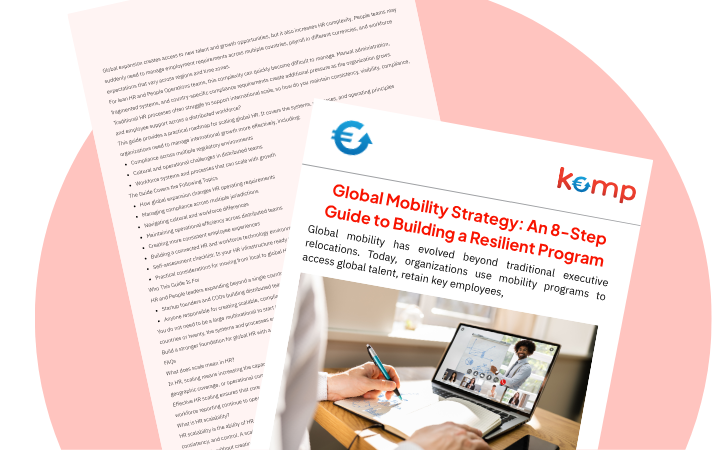
  • How organizations can move from fragmented systems toward more connected workforce operations

You’ll gain a clearer understanding of how to structure international workforce management through a more centralized and scalable operating model.

Who Will Benefit from This Guide?

  • HR and People leaders managing international workforce expansion
  • Operations teams coordinating workforce processes across multiple regions
  • Legal and Compliance teams overseeing local employment requirements
  • Finance leaders responsible for payroll, tax obligations, and workforce cost visibility
  • Organizations comparing EOR with local entity establishment
  • Companies hiring remote or distributed employees across several countries

What’s Inside?

  • The benefits of EOR-supported global workforce management
  • How EOR can support hiring, payroll, compliance, and employee lifecycle processes
  • A breakdown of legal employer responsibilities and employment administration
  • Key compliance considerations when operating across multiple jurisdictions
  • A comparison of EOR and Professional Employer Organization (PEO) models
  • A framework for moving from fragmented global workforce processes toward a more scalable operating model

FAQs

An Employer of Record typically manages employment responsibilities such as locally appropriate employment contracts, payroll administration, statutory deductions, tax-related employer obligations, social contributions, and compliance with applicable local employment requirements.

Not always. An EOR can allow an organization to hire employees in countries where it does not have its own employing entity.

This can be useful when entering new markets, hiring smaller teams, or expanding across several countries without immediately creating local infrastructure.

An Employer of Record becomes the legal employer of the worker in the relevant country.

A Professional Employer Organization generally operates through a co-employment model and typically requires the client organization to already have its own local legal entity.

Yes. EOR can support both market entry and longer-term workforce management, depending on the organization’s headcount, market commitment, operating requirements, and local circumstances.

As workforce scale increases in a specific country, organizations can reassess whether continuing with EOR or establishing their own entity is more appropriate.

Yes. EOR services are commonly used to employ remote workers in countries where the organization does not have a local entity.

Komp helps organizations connect EOR, payroll, compliance, workforce data, documentation, and lifecycle processes through one operating environment, making it easier to manage distributed teams across multiple markets.

Your Details

Realted Resources

Left-pointing arrow icon.
Right-pointing arrow icon.