Guide

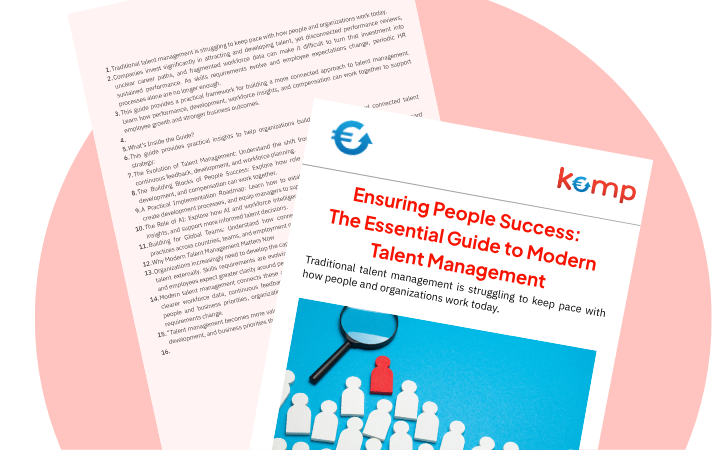
Ensuring People Success: The Essential Guide to Modern Talent Management

Traditional talent management is struggling to keep pace with how people and organizations work today.

Companies invest significantly in attracting and developing talent, yet disconnected performance reviews, unclear career paths, and fragmented workforce data can make it difficult to turn that investment into sustained performance. As skills requirements evolve and employee expectations change, periodic HR processes alone are no longer enough.

This guide provides a practical framework for building a more connected approach to talent management. Learn how performance, development, workforce insights, and compensation can work together to support employee growth and stronger business outcomes.

What’s Inside the Guide?

This guide provides practical insights to help organizations build a more modern and connected talent strategy:

  • The Evolution of Talent Management: Understand the shift from periodic performance evaluation toward continuous feedback, development, and workforce planning.
  • The Building Blocks of People Success: Explore how role clarity, performance expectations, feedback, development, and compensation can work together.
  • A Practical Implementation Roadmap: Learn how to establish a talent philosophy, define competencies, create development processes, and equip managers to support their teams.
  • The Role of AI: Explore how AI and workforce intelligence can help identify skills gaps, surface workforce insights, and support more informed talent decisions.
  • Building for Global Teams: Understand how connected workforce data can support consistent talent practices across countries, teams, and employment models.

Why Modern Talent Management Matters Now

Organizations increasingly need to develop the capabilities they already have while continuing to compete for talent externally. Skills requirements are evolving quickly, distributed teams are becoming more common, and employees expect greater clarity around performance, development, and career progression.

Modern talent management connects these areas instead of treating them as separate HR activities. With clearer workforce data, continuous feedback, structured development, and stronger alignment between people and business priorities, organizations can build a workforce that is better prepared to adapt as requirements change.

“As our teams grew across regions, performance and development became harder to manage consistently. Komp helped us connect workforce data, manager workflows, and employee development in one environment, giving leaders clearer visibility and making talent decisions more structured, timely, and aligned with business priorities.”

- Chief People Officer
Global Technology & Services Company

FAQs

Traditional talent management often relies on periodic performance reviews and separate processes for development, compensation, and workforce planning. Modern talent management takes a more connected approach, using continuous feedback, clearer performance expectations, workforce data, and development planning to support employees throughout their journey with the organization.

Annual reviews can provide useful structure, but relying on one conversation each year can make feedback less timely. More frequent performance discussions allow managers and employees to address priorities, recognize progress, identify development needs, and adjust goals as business requirements change.

Job architecture creates clearer definitions of roles, levels, responsibilities, and expectations. This helps employees understand what is required in their current role and what capabilities they may need to progress, while giving managers a more consistent framework for performance and career conversations.

AI can help organizations analyze workforce information, identify patterns, surface potential skills gaps, and reduce administrative work. Used alongside human oversight, AI-powered workforce intelligence can give HR and business leaders additional context for development, workforce planning, and talent decisions.

Organizations can make development more actionable by giving employees clear expectations, regular feedback, defined career paths, and visibility into the skills required for future opportunities.

When employees and managers can connect individual development goals with performance and business priorities, career development becomes an ongoing process rather than an occasional HR exercise.

Your Details

Realted Resources

Left-pointing arrow icon.
Right-pointing arrow icon.