Guide

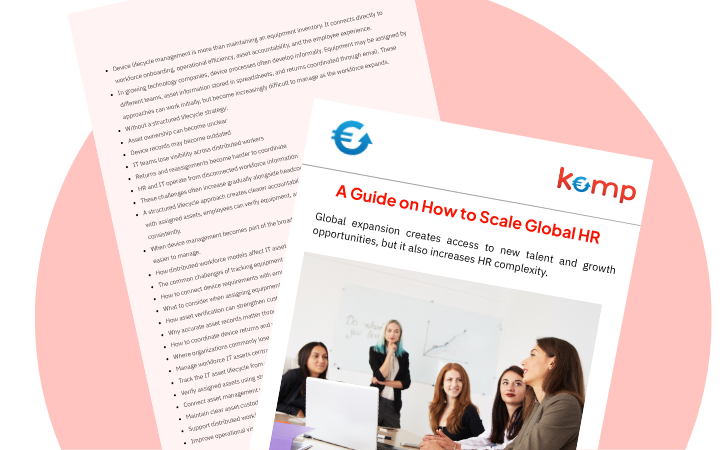
A Guide on How to Scale Global HR

Global expansion creates access to new talent and growth opportunities, but it also increases HR complexity. People teams may suddenly need to manage employment requirements across multiple countries, payroll in different currencies, and workforce expectations that vary across regions and time zones.

For lean HR and People Operations teams, this complexity can quickly become difficult to manage. Manual administration, fragmented systems, and country-specific compliance requirements create additional pressure as the organization grows.

Traditional HR processes often struggle to support international scale, so how do you maintain consistency, visibility, compliance, and employee support across a distributed workforce?

This guide provides a practical roadmap for scaling global HR. It covers the systems, processes, and operating principles organizations need to manage international growth more effectively, including:

  • Compliance across multiple regulatory environments
  • Cultural and operational challenges in distributed teams
  • Workforce systems and processes that can scale with growth

The Guide Covers the Following Topics

  • How global expansion changes HR operating requirements
  • Managing compliance across multiple jurisdictions
  • Navigating cultural and workforce differences
  • Maintaining operational efficiency across distributed teams
  • Creating more consistent employee experiences
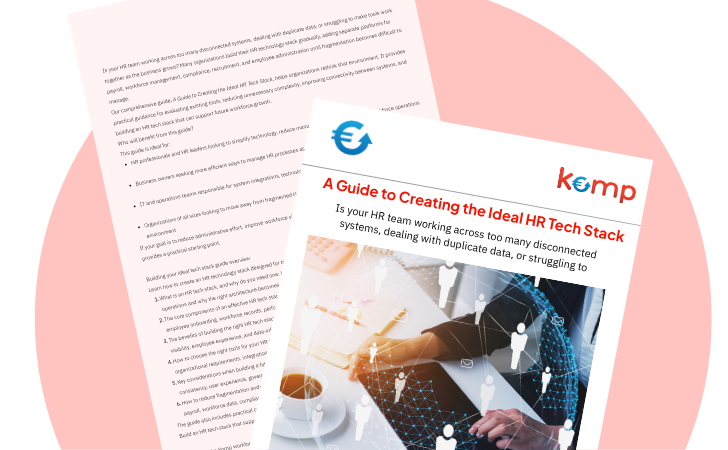
  • Building a connected HR and workforce technology environment
  • Self-assessment checklist: Is your HR infrastructure ready to scale?
  • Practical considerations for moving from local to global HR operations

Who This Guide Is For

HR and People leaders expanding beyond a single country  

  • Startup founders and COOs building distributed teams
  • Anyone responsible for creating scalable, compliant global workforce operations

You do not need to be a large multinational to start building for global scale. Whether your workforce operates across two countries or twenty, the systems and processes established today will determine how effectively HR can support future growth.

Build a stronger foundation for global HR with a structured approach to workforce operations.  

FAQs

In HR, scaling means increasing the capacity of workforce processes, systems, and teams as an organization grows in headcount, geographic coverage, or operational complexity.

Effective HR scaling ensures that core activities such as hiring, onboarding, payroll, compliance, employee management, and workforce reporting continue to operate consistently without creating a proportional increase in manual administration.

HR scalability is the ability of HR systems and processes to support organizational growth while maintaining efficiency, consistency, and control. A scalable HR operating model should accommodate more workers, countries, and workforce requirements without creating unnecessary complexity or duplicated processes.

Moving from local to global HR changes how organizations manage compliance, payroll, workforce operations, technology, and employee experience.

  • Compliance becomes multi-jurisdictional: Local HR manages one regulatory environment, while global HR must account for different employment laws, contracts, working hours, leave requirements, benefits, and data privacy rules.
  • Payroll and workforce costs become more complex: Global HR may need to coordinate multiple currencies, local tax requirements, statutory benefits, employees, contractors, and different employment models.
  • Culture and communication require greater flexibility: Distributed teams operate across different cultural norms, time zones, communication styles, and employee expectations.
  • HR technology must become more connected: Spreadsheets and isolated tools become harder to manage as the workforce grows. Global teams need systems that connect workforce data, onboarding, payroll, compliance, documentation, and reporting.
  • Employee experience must remain consistent: Global HR needs to provide clear onboarding, communication, support, and workforce processes while adapting where necessary to local requirements.
  • HR becomes increasingly strategic: As global complexity increases, HR plays a larger role in workforce planning, market expansion, operating-model design, compliance, and business decision-making.

Organizations can scale HR by:

  • Implementing connected workforce technology: Use systems that centralize workforce records, payroll, compliance, and operational workflows.
  • Standardizing core processes: Establish consistent global frameworks while allowing appropriate country-level variations.
  • Using external workforce models where appropriate: EOR, contractor management, and payroll support can reduce the need to build every capability internally.
  • Automating repetitive administration: Reduce manual data entry, approvals, and routine workflow coordination.
  • Creating flexible policies: Build policies that can adapt to different countries, worker types, and stages of growth.
  • Developing HR capability: Ensure HR teams understand global workforce operations, compliance, and cross-functional coordination.

Global HR manages workforce operations across multiple countries. Responsibilities can include global hiring, employment compliance, payroll coordination, workforce data, compensation and benefits, employee lifecycle management, talent development, and aligning workforce practices with the organization’s international business strategy.

Global Human Resource Management focuses on managing people across international locations. It typically covers recruitment, employment compliance, payroll, benefits, workforce policies, employee development, and the operational challenges created by managing distributed teams.

Local HR focuses on workforce practices within a specific country and operates within one primary legal and cultural environment. Global HR coordinates workforce operations across multiple jurisdictions while balancing organization-wide consistency with country-specific employment, payroll, and employee requirements.

The five core functions typically include:

  • Recruitment and workforce planning
  • Employment and regulatory compliance
  • Compensation, payroll, and benefits
  • Talent development and employee growth
  • Employee relations and cross-cultural workforce management

A connected global HR system can provide several benefits:

  • Consistency: More standardized workforce processes across countries and teams
  • Compliance visibility: Better oversight of country-specific workforce requirements and documentation
  • Efficiency: Reduced manual coordination across onboarding, payroll, approvals, and workforce administration
  • Centralized workforce data: A clearer view of employees, contractors, employment models, costs, and workforce status
  • Scalability: Greater ability to support new countries and workforce growth without rebuilding processes
  • Operational control: Reduced duplication and stronger coordination across HR, Finance, Legal, and Operations

HR effectiveness can be measured through indicators such as time-to-hire, employee retention, onboarding completion, payroll accuracy, compliance status, workforce cost visibility, employee engagement, administrative efficiency, and the ability to support business growth without increasing operational complexity at the same rate.

A global HR operations manager oversees day-to-day workforce processes across multiple countries. Responsibilities can include employee data, onboarding, payroll coordination, compliance documentation, workforce lifecycle activities, reporting, and ensuring global HR processes remain aligned with business requirements and local obligations.

Your Details

Realted Resources

Left-pointing arrow icon.
Right-pointing arrow icon.