Guide

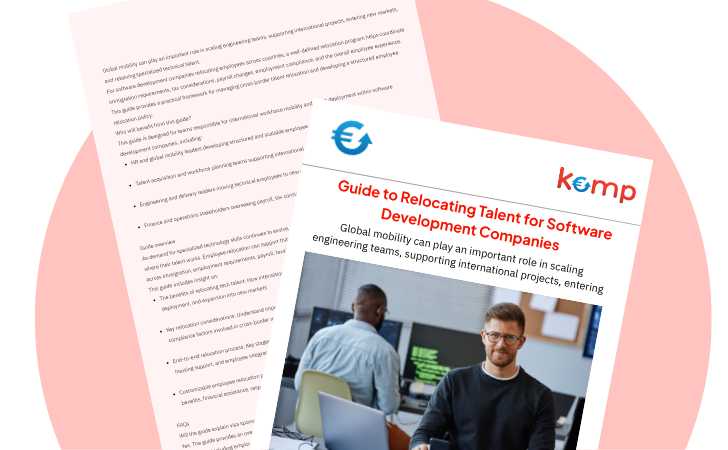
Guide to Relocating Talent for Software Development Companies

Global mobility can play an important role in scaling engineering teams, supporting international projects, entering new markets, and retaining specialized technical talent.

For software development companies relocating employees across countries, a well-defined relocation program helps coordinate immigration requirements, tax considerations, payroll changes, employment compliance, and the overall employee experience.

This guide provides a practical framework for managing cross-border talent relocation and developing a structured employee relocation policy.

Who will benefit from this guide?

This guide is designed for teams responsible for international workforce mobility and talent deployment within software development companies, including:

  • HR and global mobility leaders developing structured and scalable employee relocation programs
  • Talent acquisition and workforce planning teams supporting international hiring and expansion strategies
  • Engineering and delivery leaders moving technical employees to new markets, offices, or client locations
  • Finance and operations stakeholders overseeing payroll, tax considerations, workforce costs, and relocation budgets

Guide overview

As demand for specialized technology skills continues to evolve, software development companies may need greater flexibility in where their talent works. Employee relocation can support that flexibility, but successful programs require careful coordination across immigration, employment requirements, payroll, taxation, benefits, and workforce operations.

This guide includes insight on:

  • The benefits of relocating tech talent: How international talent mobility can support retention, workforce flexibility, skills deployment, and expansion into new markets
  • Key relocation considerations: Understand important employment, immigration, tax, payroll, work authorization, and compliance factors involved in cross-border moves
  • End-to-end relocation process: Key stages to consider, from immigration and employment documentation to payroll changes, housing support, and employee integration
  • Customizable employee relocation policy template: Establish consistent guidelines covering relocation eligibility, available benefits, financial assistance, responsibilities, and logistics

FAQs

Yes. The guide provides an overview of immigration pathways that software companies may encounter when relocating technical employees, including employment-based work visas, intra-company transfers, digital nomad or remote-work visas, and other relevant pathways. It also highlights important immigration and compliance considerations associated with international relocation.

Yes. The guide explains how international relocation can affect employee tax residency, employer obligations, and payroll withholding requirements. It also highlights the importance of considering both home- and host-country requirements when planning an employee’s move.

Yes. It covers common components organizations may consider when designing relocation packages, including immigration support, housing assistance, relocation allowances, cost-of-living considerations, and cultural integration support. These considerations can help companies develop packages suitable for employees and accompanying family members.

Yes. The guide covers practical considerations for managing relocation risk, including appropriate employment documentation, payroll coordination, compliance processes, immigration requirements, and clearly defined relocation policies.

Yes. Providing international mobility opportunities can strengthen an organization’s approach to attracting, developing, and retaining specialized technical talent. A structured mobility program can also give software companies greater flexibility to deploy skills where business and client requirements are developing.

Your Details

Realted Resources

Left-pointing arrow icon.
Right-pointing arrow icon.