Guide

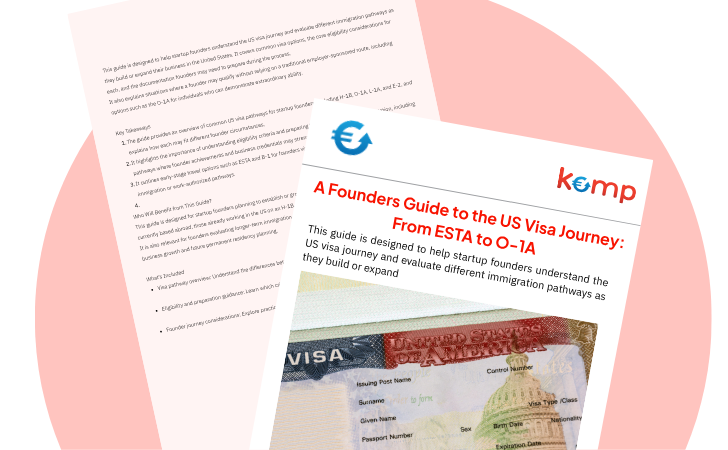
A Guide to US Startup Visas for Founders

Key takeaways

  1. The United States offers startup founders access to a large market, established investment networks, and a deep pool of skilled talent, making it an attractive destination for building and scaling a business.  
  1. Foreign founders may have several potential immigration pathways, including categories such as the O-1A, E-2, and EB-2 NIW, depending on their eligibility, nationality, business structure, and long-term plans.  
  1. Choosing the right US visa requires careful review of immigration requirements, documentation, sponsorship structures, and business circumstances. Founders should combine qualified immigration guidance with a clear workforce and expansion strategy.  

Who will benefit from this guide?

If you are planning to move to the United States to establish or grow a startup, this guide is designed for you.

Relocating to another country can initially appear complicated. This guide explains why the US remains an important destination for entrepreneurs and outlines how different immigration pathways may support eligible foreign founders building businesses that contribute to innovation, investment, and employment.

You may already have researched US startup visas and found the terminology around sponsorship, investment, extraordinary ability, and employment-based immigration difficult to navigate. This guide organizes those considerations into clearer steps, compares commonly considered founder visa options, and addresses frequently asked questions.

Readers will also gain a clearer understanding of how immigration planning fits into the wider process of establishing a business and building a workforce in the US. While immigration matters should be handled with qualified specialists, Komp can support the workforce operations that follow expansion, including employment structures, payroll, contractor management, compliance workflows, and workforce information.

What’s included

  • The potential advantages of establishing and scaling a startup in the United States
  • Common US visa and permanent residence pathways that startup founders may consider
  • An overview of the startup visa process, including eligibility considerations, documentation, sponsorship requirements, filing costs, and related factors

FAQs

There is no single visa that works best for every startup founder. The most suitable US immigration pathway depends on factors such as nationality, professional background, company ownership, funding stage, business structure, and long-term objectives.

Some founders may consider options such as the O-1A or E-2, while others may qualify through different employment-based or permanent residence pathways.

This guide compares common options for startup founders so you can better understand which routes may align with your circumstances and business stage.

US visa categories can differ significantly in how they treat company ownership, employment relationships, sponsorship, and the founder’s role within the business.

Certain pathways may allow eligible founders to actively manage their companies when the required immigration and corporate conditions are satisfied, while others may impose different restrictions.

The guide explains these distinctions so founders can evaluate immigration options alongside the level of control they expect to maintain over their business.

Venture capital funding is not necessarily required for every US immigration pathway available to startup founders.

Eligibility requirements vary by visa category, and some options focus more heavily on professional achievements, qualifying investment, business activity, or other criteria rather than institutional venture funding.

This guide outlines how founders at different funding stages can evaluate potential US relocation pathways.

The sponsorship requirements depend on the immigration category being used. Some pathways require a qualifying US employer or agent, while certain founder-led structures may allow the founder’s own company to participate in the petition when the applicable legal requirements are met.

The guide explains common sponsorship structures and the factors founders should understand when preparing a US immigration strategy.

Processing times vary depending on the immigration category, USCIS or consular procedures, the founder’s country of origin, application complexity, and whether expedited processing is available.

Some pathways may be processed more quickly than others, while permanent residence routes can involve significantly longer timelines.

This guide compares the main timing considerations founders should account for when planning a move to the US.

Many US immigration categories provide dependent status for qualifying spouses and children, although the rights available to dependents can vary depending on the visa type.

Certain dependent categories may also provide employment authorization or other benefits under applicable rules.

The guide explains the family considerations associated with common founder immigration pathways so entrepreneurs can plan their relocation more effectively.

The easiest option depends on the founder’s circumstances and priorities. A pathway that offers faster processing may not provide the same flexibility or long-term residence prospects as another option.

Founders should compare visa categories based on eligibility, sponsorship structure, processing time, business control, family considerations, and long-term objectives.

This guide helps organize those trade-offs so founders can identify which US startup visa pathways are most realistic for their situation.

Your Details

Realted Resources

Left-pointing arrow icon.
Right-pointing arrow icon.