Guide

Relocating Employees: A Complete Guide to Compliance, Costs, and Policy

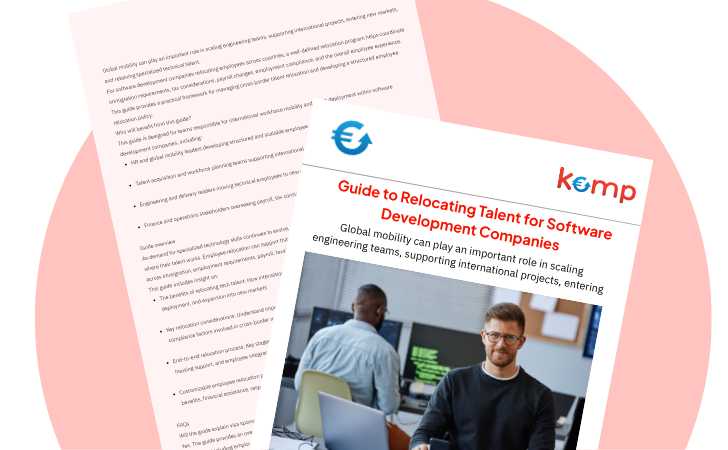
To compete effectively for global talent, organizations need more than a hiring strategy; they need a structured approach to moving employees across borders. When relocation is managed well, it can support market expansion, close skills gaps, retain valuable employees, and give organizations more flexibility than recruiting new talent from scratch. When relocation is handled poorly, it can create compliance gaps, unexpected costs, and a poor employee experience that weakens the business case for mobility.

This guide provides practical guidance for building a structured employee relocation program - from making the business case and planning costs to managing immigration, payroll, tax, employment documentation, employee support, and a formal relocation policy that can be applied consistently.

What This Guide Covers

  • The business case for relocating employees – workforce flexibility, employee retention, skills deployment, market expansion, and the potential cost advantages of relocating existing talent instead of hiring externally
  • Key compliance considerations – immigration requirements, payroll obligations, employment documentation, mandatory benefits, compensation changes, tax exposure, and data protection
  • Types of relocation and visa support – short-term assignments, work permits, residence permits, remote-work arrangements, and dependent support considerations
  • Relocation costs and budget planning – direct costs such as travel, temporary accommodation, moving support, and logistics, alongside indirect costs such as visa fees, tax support, allowances, and integration assistance
  • A step-by-step framework for relocating an employee – from immigration and employment documentation to payroll setup, moving logistics, and post-relocation support
  • How to create an employee relocation policy – including eligibility, approved expenses, compensation treatment, family support, approval workflows, and required documentation
  • How Komp supports global workforce mobility – connecting EOR, payroll, compliance, workforce documentation, and employee lifecycle visibility through one operating environment

Who Will Benefit

  • HR Directors integrating relocation into broader workforce planning and talent retention strategies
  • HR Managers managing compensation changes, benefits, relocation support, documentation, and employee experience
  • Legal and Compliance teams overseeing immigration, local employment requirements, tax exposure, and documentation across jurisdictions
  • Finance and Operations teams planning relocation budgets, reviewing cost structures, and coordinating multi-country workforce movements

FAQs

Relocation costs generally include both direct and indirect expenses. Direct costs can include airfare, temporary accommodation, shipment of personal belongings, moving services, home-search support, and other logistics.

Indirect costs may include visa and immigration fees, tax support, dependent support, cultural integration services, allowances, and any lump-sum relocation payment provided to the employee.

For international relocations, organizations should also account for exchange-rate movements, extended temporary accommodation, additional dependent costs, and country-specific tax treatment. A formal relocation policy with defined budgets and approval rules can help improve cost control.

A lump-sum relocation package gives the employee a fixed amount to cover agreed relocation expenses. This can reduce administrative work and give employees more flexibility in managing their move.

However, lump-sum arrangements work best when the organization clearly defines what the payment is expected to cover and whether major expenses, such as immigration or temporary housing, will be managed separately.

The right approach depends on employee seniority, destination, assignment type, and relocation complexity. Organizations may choose between lump-sum, fully managed, or hybrid relocation models depending on these factors.

International relocation can create tax obligations in both the employee’s home and destination countries. Organizations may need to consider payroll registration, tax residency, employer obligations, social security, and whether relocation benefits are treated as taxable compensation.

Some organizations use tax-equalization or tax-protection approaches to reduce unexpected changes in employee take-home pay.

Because tax treatment differs by jurisdiction, relocation decisions should be reviewed with qualified local tax and payroll specialists before the employee moves.

Organizations should ensure the employee has the correct work authorization before beginning work in the destination country.

The appropriate visa or permit depends on the destination, employee nationality, assignment duration, job responsibilities, and whether family members are relocating as well. Depending on the country, this may involve work permits, residence permits, digital nomad or remote-work visas, or dependent visas.

Some visa categories also require employer sponsorship or specific local documentation, so immigration planning should begin early in the relocation process.

A strong relocation experience depends on clear communication, defined responsibilities, and practical support throughout the move.

Employees should understand what the organization will cover, what documentation is required, who their point of contact is, and what to expect before, during, and after relocation.

Support may also include temporary accommodation, destination information, dependent assistance, school or childcare guidance, and regular post-relocation check-ins to identify issues early and help employees settle into the new location.

A complete relocation policy should define eligibility, approved reasons for relocation, expense categories, budget limits, approval processes, compensation treatment, benefits changes, family support, documentation requirements, and reimbursement rules.

It should also distinguish between company-initiated and employee-requested relocations, since cost coverage and responsibilities may differ.

The policy should explain what happens if the employee leaves the organization shortly after relocation and how repayment obligations, if any, will be handled.

Your Details

Realted Resources

Left-pointing arrow icon.
Right-pointing arrow icon.