Key Takeaways
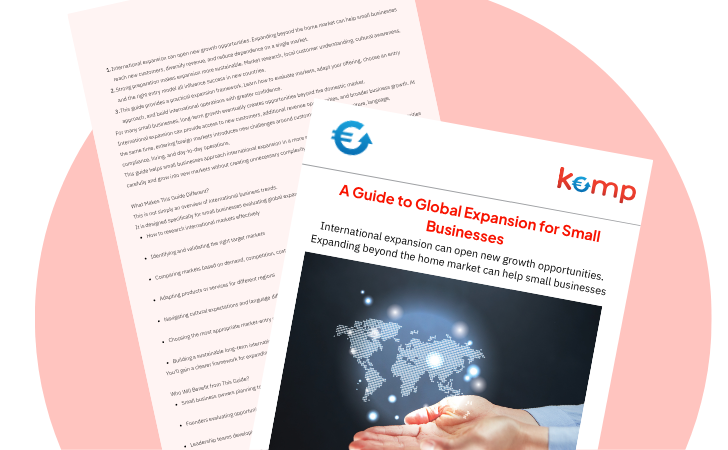
- International expansion can open new growth opportunities. Expanding beyond the home market can help small businesses reach new customers, diversify revenue, and reduce dependence on a single market.
- Strong preparation makes expansion more sustainable. Market research, local customer understanding, cultural awareness, and the right entry model all influence success in new countries.
- This guide provides a practical expansion framework. Learn how to evaluate markets, adapt your offering, choose an entry approach, and build international operations with greater confidence.
For many small businesses, long-term growth eventually creates opportunities beyond the domestic market.
International expansion can provide access to new customers, additional revenue opportunities, and broader business growth. At the same time, entering foreign markets introduces new challenges around customer expectations, culture, language, compliance, hiring, and day-to-day operations.
This guide helps small businesses approach international expansion in a more structured way, so they can evaluate opportunities carefully and grow into new markets without creating unnecessary complexity.
What Makes This Guide Different?
This is not simply an overview of international business trends.
It is designed specifically for small businesses evaluating global expansion, covering:
- How to research international markets effectively
- Identifying and validating the right target markets
- Comparing markets based on demand, competition, cost, and risk
- Adapting products or services for different regions
- Navigating cultural expectations and language differences
- Choosing the most appropriate market-entry model
- Building a sustainable long-term international growth strategy
You’ll gain a clearer framework for expanding internationally in a way that supports controlled, scalable growth.