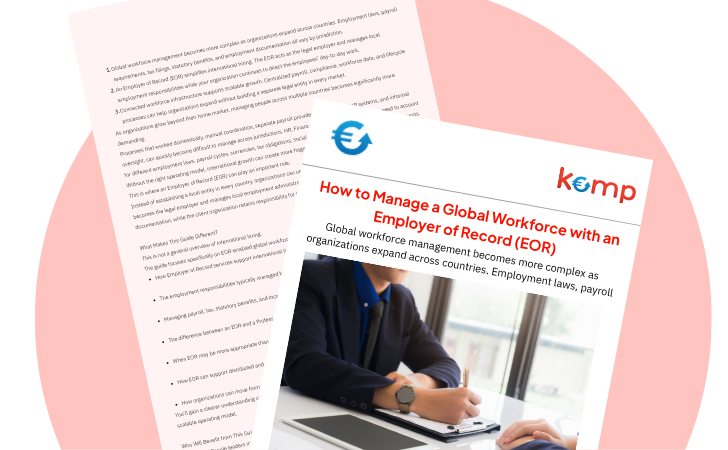
When expanding into international markets, organizations need to decide how they will employ people locally: establish their own legal entity or use an Employer of Record (EOR). Both approaches can support global growth, but they differ significantly in setup requirements, cost, operational responsibility, compliance management, and long-term flexibility. This guide compares both models and helps organizations determine which approach better fits their expansion strategy.
An EOR enables a company to employ workers in another country without establishing its own local entity. The EOR serves as the legal employer and manages local employment requirements such as contracts, payroll, statutory benefits, and employment compliance. A local entity, by comparison, gives the organization its own legal presence in the country and greater direct control over local employment and business operations.
Choosing between these models requires more than comparing initial costs. Workforce size, expected market duration, speed of entry, internal resources, compliance responsibilities, and future plans can all influence the decision. Use the questions and considerations in this guide to evaluate which structure or combination of structures best supports your global expansion.