Guide

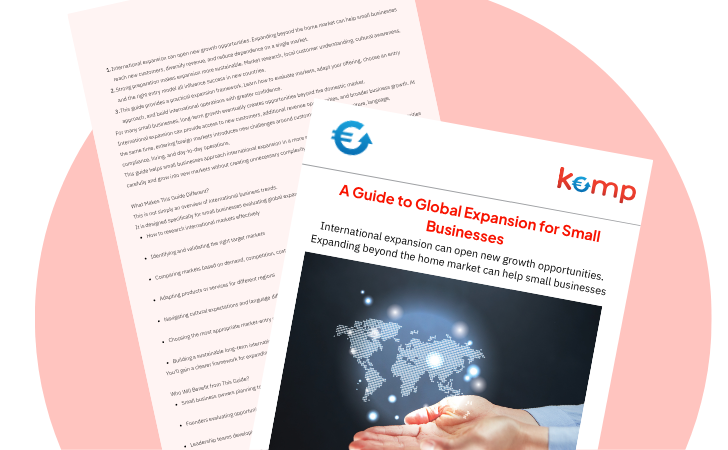
Global Expansion Strategy: A Guide to Building an International Workforce

Expanding into international markets can create new opportunities for revenue growth, access to broader talent pools, and stronger presence in strategically important regions. But international growth also introduces new employment requirements, tax considerations, compliance responsibilities, cultural differences, and workforce decisions that can significantly influence the success of market entry.

Whether your organization is entering its first international market or strengthening an existing global expansion strategy, this guide provides a practical framework for planning the journey, from evaluating markets and building international teams to selecting appropriate employment models and managing a global workforce consistently over time.

Built around the realities of international workforce operations, this guide helps organizations approach global expansion with greater visibility, structure, and confidence.

What This Guide Covers

  • The potential benefits of international expansion, from accessing new revenue opportunities and global talent to establishing local market presence and strengthening competitive positioning
  • Key considerations before entering a new market, including employment requirements, tax and compliance considerations, workforce availability, and cultural differences
  • A step-by-step approach to global expansion: market assessment, entry strategy, resource planning, talent acquisition, and adapting your approach to local market conditions
  • The differences between establishing your own local entity and hiring through an Employer of Record (EOR), including factors that can determine which model better supports your expansion plans
  • A practical international expansion checklist covering market strategy, workforce planning, hiring, local compliance, and ongoing global workforce management

Who Will Benefit

  • Business leaders and founders developing an international expansion strategy or looking to enter new markets with greater speed, visibility, and operational control
  • HR and People teams responsible for international hiring, workforce management, onboarding, and navigating employment requirements across countries
  • Finance and operations teams evaluating the costs, resources, and operational implications of local entity establishment compared with alternative employment models
  • Legal and compliance teams managing employment requirements, worker classification considerations, documentation, and compliance responsibilities across international markets

FAQs

A global expansion strategy is a structured plan for entering and operating in international markets. It typically considers market selection, workforce requirements, employment models, compliance, talent acquisition, costs, and how international operations will be managed as the business grows.

A strong starting point is market assessment. Organizations should understand the commercial opportunity, workforce availability, employment and tax environment, operating requirements, and cultural considerations in each target market before committing significant resources.

Organizations can enter international markets through several models, including exporting, partnerships or franchising, mergers and acquisitions, establishing a local subsidiary, and building teams through an Employer of Record (EOR). Each approach involves different levels of investment, control, speed, and operational responsibility.

For organizations that want to build a workforce before establishing their own entity, an EOR can provide a more flexible entry model. The appropriate strategy ultimately depends on the organization's commercial objectives, expected workforce size, market commitment, and long-term plans.

Establishing a subsidiary creates a direct legal presence in the target country and gives an organization greater control over local employment and business operations. It can be appropriate where the company expects substantial long-term activity or workforce scale, but it also requires incorporation, ongoing administration, local expertise, and additional compliance infrastructure.

An Employer of Record allows an organization to employ workers in a country without first establishing its own local entity. This can provide a more flexible approach for entering new markets, building smaller teams, or evaluating opportunities before committing to permanent local infrastructure.

An EOR serves as the legal employer of workers in countries where an organization does not have its own employing entity. Depending on the arrangement, the EOR can manage locally appropriate employment contracts, payroll, statutory benefits, employment administration, and other employer responsibilities.

This allows organizations to focus on their business and workforce strategy while reducing the need to establish employment infrastructure independently in every new market. It can be particularly useful when expanding across several jurisdictions at the same time.

Common areas of risk include incorrect worker classification, failure to meet local employment and statutory benefit requirements, payroll and tax errors, inadequate employment documentation, and non-compliance with applicable data protection requirements.

These risks become more difficult to manage when organizations operate across several jurisdictions with different rules. Establishing clear governance, maintaining appropriate documentation, and working with qualified local experts or workforce partners can help organizations manage these responsibilities more consistently.

Effective global workforce management requires consistency without ignoring local differences. Organizations need structured processes for onboarding, payroll, workforce administration, communication, and employee support while adapting practices where local employment requirements or cultural expectations differ.

Komp helps organizations connect global hiring and workforce operations through one operating environment, supporting EOR, contractor management, payroll, compliance workflows, and workforce visibility. This gives HR, Finance, and Operations teams a more consistent way to manage international workforces as the organization expands.

Your Details

Realted Resources

Left-pointing arrow icon.
Right-pointing arrow icon.