Retail operations are changing quickly. Device management needs to evolve with them.
Automation, digital payments, mobile commerce, and connected retail experiences have changed how customers interact with brands and how employees work. Today, operational performance depends not only on products and customer service, but also on how reliably organizations manage the technology their teams use every day.
Retail employees rely on different devices, including tablets, smartphones, and laptops. These devices support customer interactions, transactions, inventory activities, communication, and everyday store operations.
When device processes are fragmented or outdated, operational issues appear quickly. Equipment reaches employees late. New hires cannot start effectively. Device problems interrupt work during busy periods. Employees spend time resolving technology issues instead of serving customers. Productivity suffers, and revenue opportunities can be affected.
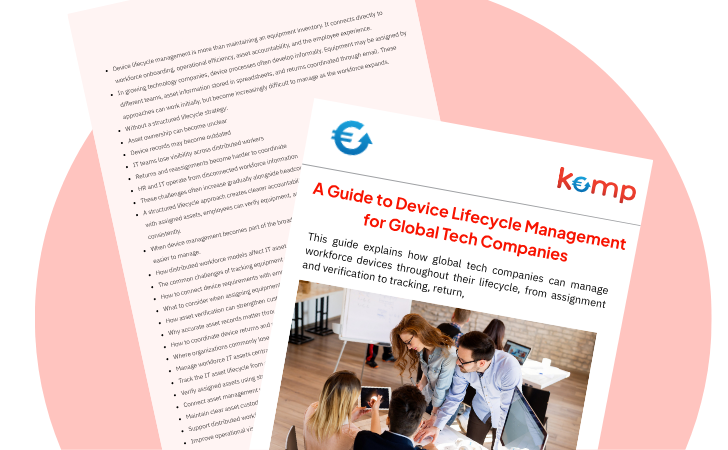
This guide provides a practical approach to building a secure, consistent, and scalable device management strategy for global retail teams. It explains how organizations can replace fragmented manual processes with structured workflows that improve visibility, reduce operational risk, and support expansion.
Retail Device Management for Global Teams: Overview
Managing devices across international retail operations becomes increasingly complicated when employees are distributed across locations, mobile roles, and seasonal workforces.
Retail teams operate far beyond a traditional office. Employees may work across stores, warehouses, temporary locations, corporate offices, remote environments, and field sales roles. Devices regularly need to be deployed, reassigned, maintained, replaced, recovered, or retired across different markets.
Traditional device processes designed around centralized workplaces can struggle with this level of workforce movement. Challenges become particularly visible across:
- Temporary stores and short-term retail locations
- Mobile and field-based sales teams
- Remote operational and support employees
- Seasonal workforce increases
- Fast expansion into international markets
Without standardized processes, device management becomes reactive, with urgent requests, spreadsheets, manual coordination, and different practices across locations.
This guide covers the complete retail device lifecycle, from planning and procurement through maintenance, recovery, and retirement, helping organizations establish greater structure, visibility, and accountability while controlling unnecessary operational costs.
Why Retail Device Management Is Mission-Critical
In retail, workforce devices directly support business operations.
Laptops, tablets, smartphones, and other equipment can influence how employees assist customers, complete transactions, communicate, and manage daily activities. When equipment is unavailable, incorrectly configured, or insecure, the operational consequences can appear immediately through slower service, interrupted transactions, employee frustration, and potential lost sales.
Retail operations move quickly, particularly during seasonal and peak-demand periods. Device processes therefore need to remain reliable across different locations.
Strong retail device management helps ensure:
- Employees have appropriate equipment when they begin work
- Devices follow consistent configuration, update, and security processes
- Assets remain visible as they move across teams and locations
- Sensitive information is protected when equipment is lost, recovered, or retired
- Device-related costs remain easier to manage as workforce requirements change
Device management is therefore more than an IT responsibility. It forms part of the operational infrastructure supporting customer experience, workforce productivity, compliance, and international growth.
This guide provides a practical framework for managing retail devices at scale. Download it to build stronger, more consistent global operations.
What’s Inside the Guide
You’ll learn how to:
- Establish consistent device processes across stores, countries, and mobile teams
- Minimize equipment-related delays during employee onboarding
- Improve asset visibility and reduce dependence on manual tracking
- Strengthen security and compliance practices during international expansion
- Standardize lifecycle processes without adding unnecessary operational complexity
Who Is This Guide For?
This resource is designed for teams responsible for distributed retail operations:
- HR and Procurement Specialists coordinating equipment requirements and allocation across locations
- IT Leaders responsible for device security, applications, access, and software management
- Operations Leaders standardizing device lifecycle processes across stores and regions
- Retail Managers managing employee turnover, seasonal hiring, and rapid onboarding
If your organization is expanding internationally or supporting mobile and distributed retail teams, this guide provides a framework for scaling with greater structure and visibility.
The Hidden Costs of Poor Retail Device Management
The full cost of ineffective device management is not always visible within the technology budget.
Across retail operations, small inefficiencies can accumulate quickly. Fragmented and manual processes consume employee time and create operational delays across multiple locations.
Common hidden costs include:
- Coordinating equipment shipments across suppliers and countries
- Handling customs requirements and unexpected delivery issues
- Resolving device problems through disconnected communication channels
- Maintaining manual asset records that can quickly become inaccurate
Individually, these tasks may appear manageable. At scale, however, they can consume significant IT and operations capacity while delaying onboarding, new-store readiness, and international expansion.
Security exposure creates another concern. Retail organizations regularly work with sensitive business, customer, and transaction-related information. Lost, stolen, or improperly retired equipment can create financial, operational, and reputational risk.
A structured device lifecycle strategy improves accountability. It strengthens information protection, reduces avoidable inefficiencies, and provides teams with clearer processes as operations grow.
Connect Global Retail Workforce Operations with Komp
Managing distributed retail teams requires coordination across onboarding, workforce records, compliance, operational responsibilities, and offboarding, particularly when employee volumes change quickly across countries and seasons.
Komp helps organizations centralize workforce lifecycle information and improve coordination across global teams, creating clearer visibility into worker status, documentation, compliance requirements, and operational actions throughout the workforce lifecycle.
With Komp, retail organizations can:
- Maintain centralized workforce information across locations and worker types
- Improve visibility into onboarding and offboarding requirements
- Coordinate workforce lifecycle changes across responsible teams
- Maintain clearer documentation and accountability across global operations
- Support structured processes during seasonal workforce changes
- Strengthen workforce governance as retail operations expand internationally
- Reduce reliance on fragmented workforce records and manual workflows
With Komp, organizations can create a more connected workforce operating environment - helping HR, operations, compliance, and other responsible teams work from clearer information.
Book a demo to explore how Komp can support your global retail workforce operations.




.png)





































.png)