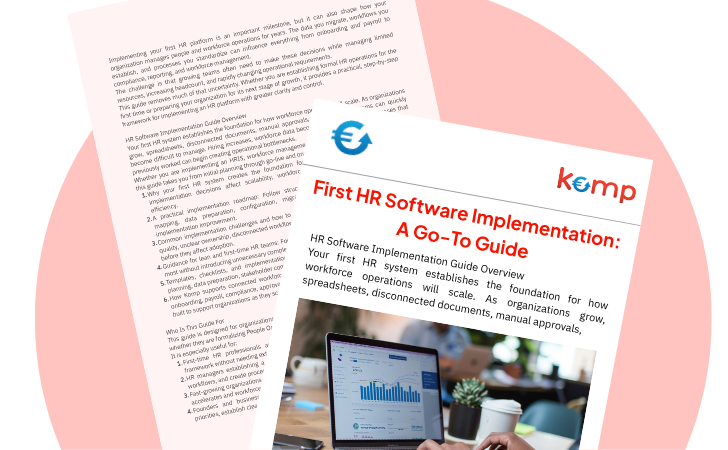
As your company and workforce grow, managing employee information across spreadsheets and disconnected tools can become slow, inconsistent, and difficult to scale. An HR information system (HRIS) can bring workforce data into a more structured environment and support core processes such as employee records, payroll coordination, documentation, onboarding, attendance, reporting, and compliance workflows.
But selecting the right HRIS requires more than comparing feature lists. This guide explains how to evaluate HRIS software based on your firm’s operating model, growth plans, workforce complexity, and technology requirements.
- When and why your firm may need an HRIS
- Important capabilities and evaluation criteria to consider
- A practical step-by-step HRIS selection checklist
- Common scenarios that can help guide your decision
Who will benefit from this guide?
- HR professionals looking to improve workforce administration, payroll coordination, compliance visibility, and employee data management
- Business leaders evaluating scalable workforce technology for growing teams
- Small and medium-sized businesses preparing for greater HR and operational complexity
- Global companies managing distributed teams, multiple worker types, and cross-border workforce requirements
“An HRIS works best when it becomes a dependable source of workforce information that supports other HR and business systems. The value comes from having accurate data, clearly defined processes, and connected workflows across the firm.”
- Head of People Operations, Komp
Whether you are implementing an HRIS for the first time or reviewing your current technology, this guide will help you evaluate solutions against your operational needs and future workforce strategy.
How to choose HRIS software: Guide overview
Learn how to evaluate and select HRIS software for your firm. The guide covers the following topics:
- What is an HRIS- Understand the purpose of a human resources information system and how it supports workforce administration
- Why should companies use an HRIS- Explore how centralized workforce information can improve efficiency, visibility, and business decision-making
- The benefits of using an HRIS- Learn how structured data and connected workflows can reduce administrative complexity and support more consistent workforce operations
- When does your company need an HRIS- Recognize the growth signals and operational challenges that indicate spreadsheets or disconnected systems are no longer enough
- Key features to look for- Identify the capabilities that matter most based on your workforce, geography, growth plans, and operating model
- HRIS selection checklist and scenarios- Use a practical evaluation framework and business scenarios to compare potential solutions
- Komp and connected workforce operations- See how Komp connects workforce information with global payroll, EOR, contractor management, and compliance workflows to support firms managing increasingly complex global teams
Don’t allow fragmented workforce processes to limit growth. Use the guide to start building a more connected and scalable HR technology foundation.