Guide

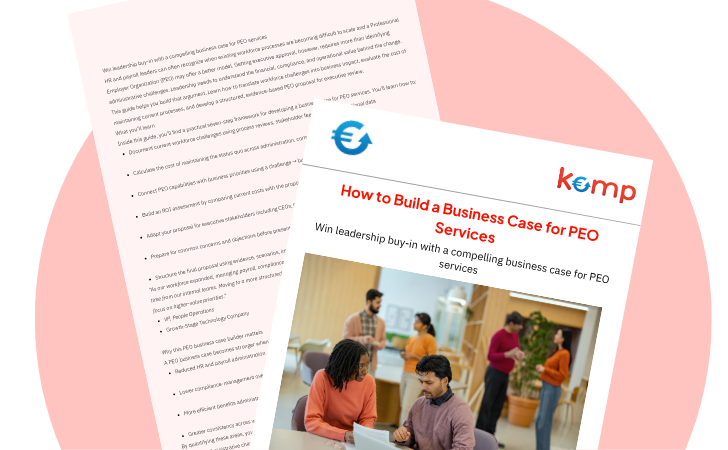
How to Build a Business Case for PEO Services

Win leadership buy-in with a compelling business case for PEO services

HR and payroll leaders can often recognize when existing workforce processes are becoming difficult to scale and a Professional Employer Organization (PEO) may offer a better model. Getting executive approval, however, requires more than identifying administrative challenges. Leadership needs to understand the financial, compliance, and operational value behind the change.

This guide helps you build that argument. Learn how to translate workforce challenges into business impact, evaluate the cost of maintaining current processes, and develop a structured, evidence-based PEO proposal for executive review.

What you’ll learn

Inside this guide, you’ll find a practical seven-step framework for developing a business case for PEO services. You’ll learn how to:

  • Document current workforce challenges using process reviews, stakeholder feedback, and operational data
  • Calculate the cost of maintaining the status quo across administration, compliance, and workforce operations
  • Connect PEO capabilities with business priorities using a challenge → business impact → solution approach
  • Build an ROI assessment by comparing current costs with the proposed PEO operating model
  • Adapt your proposal for executive stakeholders including CEOs, CFOs, and legal leadership
  • Prepare for common concerns and objections before presenting your recommendation
  • Structure the final proposal using evidence, scenarios, implementation considerations, and clear next steps

“As our workforce expanded, managing payroll, compliance, and HR administration across different requirements was taking more time from our internal teams. Moving to a more structured employment model gave us greater consistency and allowed our team to focus on higher-value priorities.”

VP, People Operations

- Growth-Stage Technology Company

Why this PEO business case builder matters

A PEO business case becomes stronger when organizations evaluate measurable outcomes such as:

  • Reduced HR and payroll administration
  • Lower compliance-management overhead
  • More efficient benefits administration
  • Greater consistency across workforce processes

By quantifying these areas, you can position PEO services as a broader workforce investment rather than simply another HR vendor or administrative change.

Ready to get leadership buy-in?

Start developing a proposal that connects PEO adoption with operational efficiency, stronger workforce governance, and sustainable business growth.

FAQs

A Professional Employer Organization (PEO) supports US employers through a co-employment relationship, typically helping manage areas such as payroll, benefits administration, HR processes, and employment compliance. Companies may consider a PEO when internal administration becomes difficult to scale or when they want additional support managing employer responsibilities.

Komp helps organizations evaluate workforce models within a broader operating environment that connects payroll, compliance, workforce information, and global employment requirements.

Payroll managers, HR leaders, finance teams, and other workforce decision-makers who need to evaluate PEO services and develop a structured proposal for executive stakeholders.

You’ll receive a practical framework for documenting existing challenges, assessing costs and potential value, responding to stakeholder concerns, and presenting a more evidence-based PEO business case to leadership.

No. The guide is designed to help organizations objectively evaluate and build a business case for PEO services. It also explains how Komp’s connected approach to payroll, compliance, and workforce operations can support a broader workforce strategy.

Your Details

Realted Resources

Left-pointing arrow icon.
Right-pointing arrow icon.